
Category Archives: Tax Tips

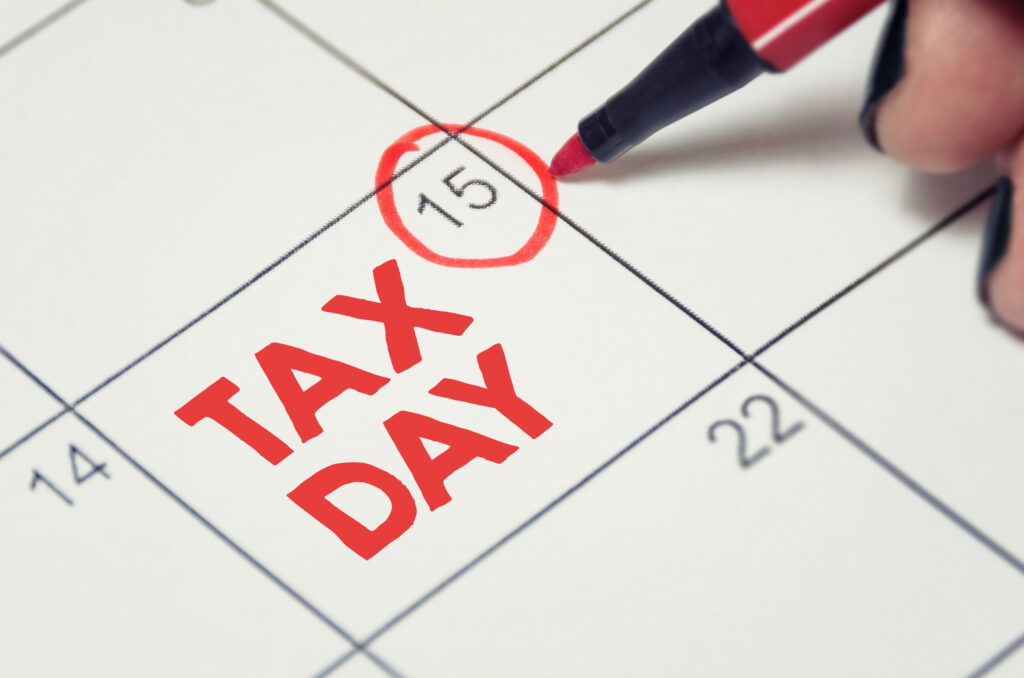
Tax Deadline Wednesday, April 15

There’s never a convenient time to file your income tax return. Between work, family, and surprise tax forms showing up, the tax filing deadline can sneak up on you fast. Thankfully, if you don’t yet have your appointment, you can slow things down by filing a tax extension, giving you extra time to file your federal tax return, pushing your tax filing deadline to Oct. 15, 2026 instead of April 15. While a tax extension gives you six more months to file your income tax, it does not give you more time to pay any tax owed, payment is still due by the tax filing deadline, April 15. If you don’t pay your tax bill by then, you could face paying penalties and interest. When you file for an IRS tax extension, you must estimate how much tax you owe. If you have not made your appointment, call us at (631) 585-9698 and we can file your extension. You can also schedule an appointment to complete your tax return after April 15. #April15 #taxdue #taxreturndue #taxdeadline #taxextension #longislandtaxes #ronkonkoma #taxservices #taxservicesLI #taxservicesNY
Traditional IRA vs. Roth IRA: What’s the Difference?

Individual retirement accounts (IRAs) and Roth IRA plans share many similarities, but each comes with its own set of tax-advantaged perks. Traditional IRA • Contributions to traditional accounts are made with pre-tax dollars • Your money grows tax-deferred until you withdraw it • You’ll pay income tax on withdrawals in retirement • A 10% early withdrawal penalty applies if you take distributions before age 59 ½. • The 2025 contribution limit is $7,000, or $8,000 if age 50 or older • Deducting your contributions lowers your current taxable income • If you are right on the edge between two tax brackets, contributing to a traditional IRA could push you into a lower tax bracket or help you qualify for other tax credits • Tax-deferred growth means you pay taxes later when you withdraw in retirement • You can open one on your own, no employer needed, making an IRA perfect for freelancers, gig workers, and the self-employed Roth IRA • Contributions are made with after-tax dollars, so you won’t get an upfront tax deduction • Money grows tax-free, and qualified withdrawals are also tax-free • You can withdraw contributions (not earnings) at any time penalty-free • The 2025 contribution limit is $7,000 or $8,000 if age 50 or older • When you contribute, you don’t get a tax break upfront, but your money grows tax-free • In retirement, qualified withdrawals (including earnings) are 100% tax-free. This can be a • big benefit if you expect your tax rate to be higher in retirement • Like a traditional IRA, you don’t need an employer to open a Roth IRA, making it appealing to self-employed people Use a Roth IRA if you expect to be in a higher tax bracket later when you retire. Use a traditional IRA if you want to lower your taxable income now. Whichever retirement plan you choose, start early and contribute consistently. Compounding interest and dividends over time means more growth, no matter what type of investment account you have. Call us at (631) 585-9698 to discuss whether to put your money in a traditional IRA or a Roth IRA. #retirement #IRA #rothira #retirementsaving #longislandtaxes #ronkonkoma #familyowned #taxservices #tfs

Do Tax Extensions Give You More Time To Pay Your Tax Bill?

If you end up stuck with a large, unexpected tax bill, your first instinct might be to file for a tax extension. While a tax extension gives you six more months to file your income tax, it does not give you more time to pay any tax owed, payment is still due by the tax filing deadline, April 15, 2025. If you don’t pay your tax bill by then, you could face paying penalties and interest. When you file for an IRS tax extension, you must estimate how much tax you owe. If in doubt, shoot for overpaying any tax due rather than underpaying. You’ll get any excess tax payments back as a tax refund when you officially file your return. You aren’t out of options if you don’t think you’ll be able to pay your tax bill by April 15. The IRS offers short and long-term payment plans for those who need them. To request a payment installment agreement, you’ll just need to fill out Form 9465. You’ll have several options to pay, such as setting up monthly Electronic Funds Withdrawal or requesting payments be taken out of your paychecks. Once you’ve filed a payment installment agreement request, the IRS should let you know within 30 days if your request was approved or denied. Even if you set up a payment plan with the IRS, you’ll still be charged a fee and likely have to pay interest on your tax owed until your bill is paid. With that in mind, the best thing to do would be to file and pay by April 15 if you can swing it. Tax + Financial Services of NY can help you figure out your tax due and file your extension. We can also help set up any installment plan. Call us at (631) 585-9698 to discuss your options. #taxpayments #taxdue #installmentplans #irsinstallmentplan #taxextension #longislandtaxes #ronkonkoma #familyowned #taxservices #taxservicesLI #taxservicesNY

SALT Tax Deduction

Understanding the SALT tax deduction (state and local tax deduction) can help you maximize your itemized deductions by reducing your federal tax liability. This tax break allows you to claim certain state and local taxes you’ve paid, including income tax, sales tax, and property taxes, up to an annual limit. SALT stands for state and local taxes, including income, sales, and property taxes paid to state and local governments (NOT the federal government). The SALT tax deduction lets taxpayers who itemize subtract those taxes from their federal taxable income. To claim this deduction, you must itemize; you can’t take the SALT deduction if you claim the standard deduction. In 2025, the SALT cap rose from $10,000 to $40,000 for most filers (half that amount for married filing separately). When you itemize on Schedule A (form 1040) you can include the total amount of eligible taxes paid, up to the annual limit. This can your tax liability, meaning you might end up with a lower tax bill or get more money back as a tax refund. The SALT tax deduction only applies if you itemize deductions on your federal income tax return. If you choose to take the standard deduction, you won’t be able to deduct SALT. If you live in a high-tax state, the expanded SALT deduction cap could make a noticeable difference in your next tax return. Tax + Financial Services of NY can help you navigate all the changes and claim every possible tax break that you qualify for under current law so call our office at (631) 585-9698. #2026Taxes #SALT #SALTdeduction #itemizeddeductions #longislandtaxes #ronkonkoma #familyowned #taxservices #taxservicesLI #taxservicesNY

Where’s my New York state refund?

Like the IRS, New York State allows you to check the status of your refund on its website. To see your refund status, you’ll need the tax year, your Social Security number, the form you filed, and the expected refund amount. The website for the New York State Department of Taxation and Finance is where you can check the status of your NY state tax refund. Refund Status Website: New York State Department of Taxation and Finance Refund Status Phone Support: 1-518-457-5149 General Information: 1-518-457-5181 If you expect a refund from your New York (NY) personal income tax return, you can check the status of your tax refund one week after you e-file. Additionally, direct deposit is the quickest way to receive your NY state tax refund. A paper check takes an additional week or two to process. If you need any help getting your refund status, call Tax + Financial Services of NY at (631) 585-9698. #taxrefunds #refundtracker #nysrefund #nysrefundtracker #longislandtaxes #ronkonkoma #familyowned #taxservices #taxservicesLI #taxservicesNY
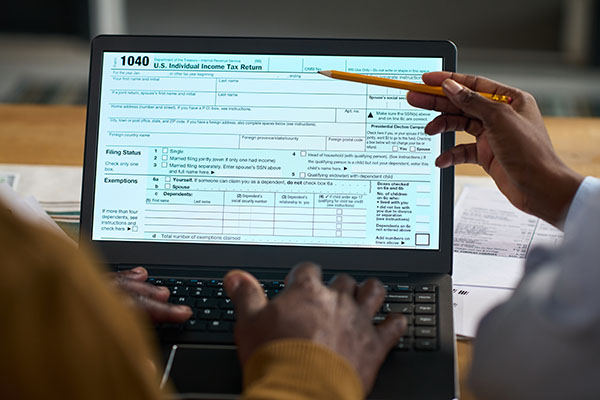
How To Check Your Federal Refund Status

One of the hardest parts about doing your taxes? Waiting for that tax refund to hit your bank account. If you’re expecting a tax refund this year, here’s how you can check your tax refund status.

There are two different ways to easily track the status of your refund.

• Where’s My Refund? (https://www.irs.gov/refunds) – This is the Internal Revenue Service’s (IRS) official online tool for tracking the status of your refund.
• IRS2Go mobile app – This IRS app makes it easy to check the status of your refund. For all methods listed above, taxpayers must input their Social Security number, filing status, and exact refund amount.

How quickly you can track the status of your refund depends on how you filed your individual income tax return this year:

• E-filers can typically check their refund status within 24 hours after e-filing their return.
• Paper filers need to wait four weeks after mailing their return before they can view their refund status online or on the IRS mobile app.

There are three possible stages when checking on your refund status:
• Return Received
• Refund Approved
• Refund Sent

In some cases, if there is an issue with your return, the Where’s My Refund tool may direct you to call the IRS for more information.

How long it takes to receive your refund also varies depending on how you filed your tax return:

• E-filers should wait up to 21 days for their refund to be issued.
• Paper filers should expect to wait 6 weeks or more for returns sent by mail.

If you need any help getting your refund status, call Tax + Financial Services of NY at (631) 585-9698.

#taxrefunds #refundtracker #longislandtaxes #ronkonkoma #familyowned
#taxservices #tfs #taxservicesLI #taxservicesNY

Tax Return Documents

To help prepare for your tax appointment, we’ve created a checklist of what forms to bring.

– Personal Info –

• Full name, social security number, date of birth, driver’s license
• Spouse’s full name, social security number, date of birth, driver’s license
• Dependents full name, social security number, date of birth
• Any IRS issued Identity Protection PIN for your spouse, or your dependent
• Routing and account numbers

– Sources of Income –

• W-2’s
• Unemployment (1099-G)

Self-Employed

• Forms 1099, other income records
• Records of all expenses including mileage and home office

Rental Income

• Records of income/expenses
• Cost, date placed in service

Retirement Income

• Retirement Acct Withdrawals (1099-R)
• SS/RRB income (SSA-1099, RRB-1099)

Savings & Investments

• Interest, dividend income (1099-INT, 1099-OID, 1099-DIV)
• Income from stock sales (1099-B)
• Cryptocurrency transactions, NFTs

Other Income & Losses

• Gambling income (W-2G), records of losses
• Record of alimony paid/received with ex-spouse’s name/SSN

– Records of dates and amount paid for estimated taxes –

Deductions

• Forms 1098 or other mortgage interest statements, real estate tax bill
• Cash amounts donated to houses of worship/charitable organizations
• Non-cash charitable donations

Medical Expenses

Amounts paid for healthcare, insurance, doctors, dentists, hospitals, and prescriptions
Form 1095-A if enrolled in an insurance plan through the Marketplace

Childcare Expenses

• Fees paid to a licensed day care center or family day care for care of an infant or preschooler including the provider’s tax ID number
• Expenses paid through a dependent care flexible spending account at work

Educational Expenses

• Forms 1098-T for tuition and receipts of educational expenses (books, lab fees)

Retirement & Other Savings

• Form 5498-SA for HSA contributions
• IRA contributions
• Education savings account contributions

If you need any help gathering documents, call us at (631) 585-9698

#taxdocuments #longislandtaxes #ronkonkoma #familyowned
#taxservices #tfs